REQUESTS / DISPATCH / MOVEMENT / EXCEPTIONS / COMMUNICATION / VISIBILITY
Logistics systems built for clear movement, faster coordination and stronger operational control.
Jenrix builds logistics and supply chain software for transport, distribution and operations teams that need better request handling, dispatch coordination, stage visibility, exception management, communication and management reporting.
Instead of coordinating critical movement through calls, WhatsApp groups, spreadsheets and disconnected tracking sheets, operational work can move through one structured digital workflow.
DISPATCH CONTROL
STATUS VISIBILITY
EXCEPTION HANDLING
OPERATIONS DASHBOARD
JENRIX / LOGISTICS OPERATIONS ENGINE
Request → Assign → Dispatch → Move → Resolve → Monitor
OPERATIONS ACTIVE
REQUESTSROUTING
DISPATCHACTIVE
MOVEMENTVISIBLE
EXCEPTIONSCONTROLLED
OPERATIONSLIVE
JENRIX CORE
FLOW OPS
REQUEST / DISPATCH / MOVEMENT / CONTROL
LIVE OPERATIONS EVENT
NEW MOVEMENT REQUEST / OWNER ASSIGNED
THE OPERATING REALITY
01
Every movement should have a clear owner, current stage and exception path.
The system should show what is waiting, what has been assigned, what is moving, what is delayed and what needs intervention next.
Request
Dispatch
Move
Resolve
WHERE LOGISTICS OPERATIONS BREAK
Delays usually become expensive when status, ownership and exceptions are not visible early.
Logistics teams already understand movement. The digital challenge is keeping every request, assignment, update and exception visible across people and locations.
Requests Enter Informally
Orders, pickups, transfers and service needs begin through calls, messages or disconnected sheets.
Dispatch Ownership Is Unclear
Teams know movement is required, but responsibility and target timing are not always obvious.
Status Depends on Manual Updates
Operations repeatedly call or message for current movement status instead of seeing it centrally.
Approvals Slow Movement
Special requests, holds or operational decisions wait because the next authority is not system-driven.
Exceptions Stay in Conversations
Delays, failed attempts, route changes and blockers remain hidden inside individual communication.
Management Sees Bottlenecks Late
Ageing requests, repeated delays and overloaded teams become visible after service has already suffered.
JENRIX LOGISTICS OPERATING SYSTEM
One connected flow from movement request to completion and exception resolution.
Jenrix structures logistics systems around intake, assignment, dispatch, status movement, exceptions, communication and management visibility.
Every team works, but movement is coordinated through manual updates.
- Requests enter through multiple informal channels
- Dispatch responsibility is difficult to monitor
- Status updates depend on repeated calls and messages
- Exceptions stay outside the main workflow
- Management reporting is assembled after the fact
Request, dispatch, movement and exception handling become one operating workflow.
- Requests enter through a structured intake process
- Assignment and responsibility remain visible
- Movement stages can be tracked consistently
- Delays and exceptions trigger controlled action
- Dashboards show pending work and bottlenecks live
LOGISTICS & SUPPLY CHAIN CAPABILITIES
Systems designed around movement, coordination, exceptions and operational visibility.
Jenrix can combine workflow software, dispatch coordination, approval logic, communication and dashboards into one logistics operating layer.
Request & Order Intake
Structured intake for movement requests, pickups, transfers, service requirements and operational orders.
Dispatch & Assignment
Assign teams, vehicles, partners, routes, territories or operating responsibility with due times and status.
Movement Workflow
Track operational stages such as ready, assigned, dispatched, in transit, delivered or completed.
Approval Workflows
Route special requests, holds, exceptions or operational decisions through controlled review and approval.
Exception & Delay Management
Flag delays, failed attempts, blockers, holds and escalation conditions for faster intervention.
Communication Automation
Operational alerts, reminders, status messages, escalation notifications and event-linked updates.
Operations Dashboards
Open requests, movement stages, delays, pending approvals, team load, ageing and management visibility.
Admin & Control Layers
Permissions, logs, operating roles, support views, overrides and structured governance across the platform.
LOGISTICS SYSTEM REFERENCE
The objective is not another tracking screen. It is better operational movement.
Your existing logistics visual remains as a supporting reference, while the live architecture above explains how requests, dispatch, movement, exceptions and management visibility connect.
JENRIX / LOGISTICS & SUPPLY CHAIN REFERENCE
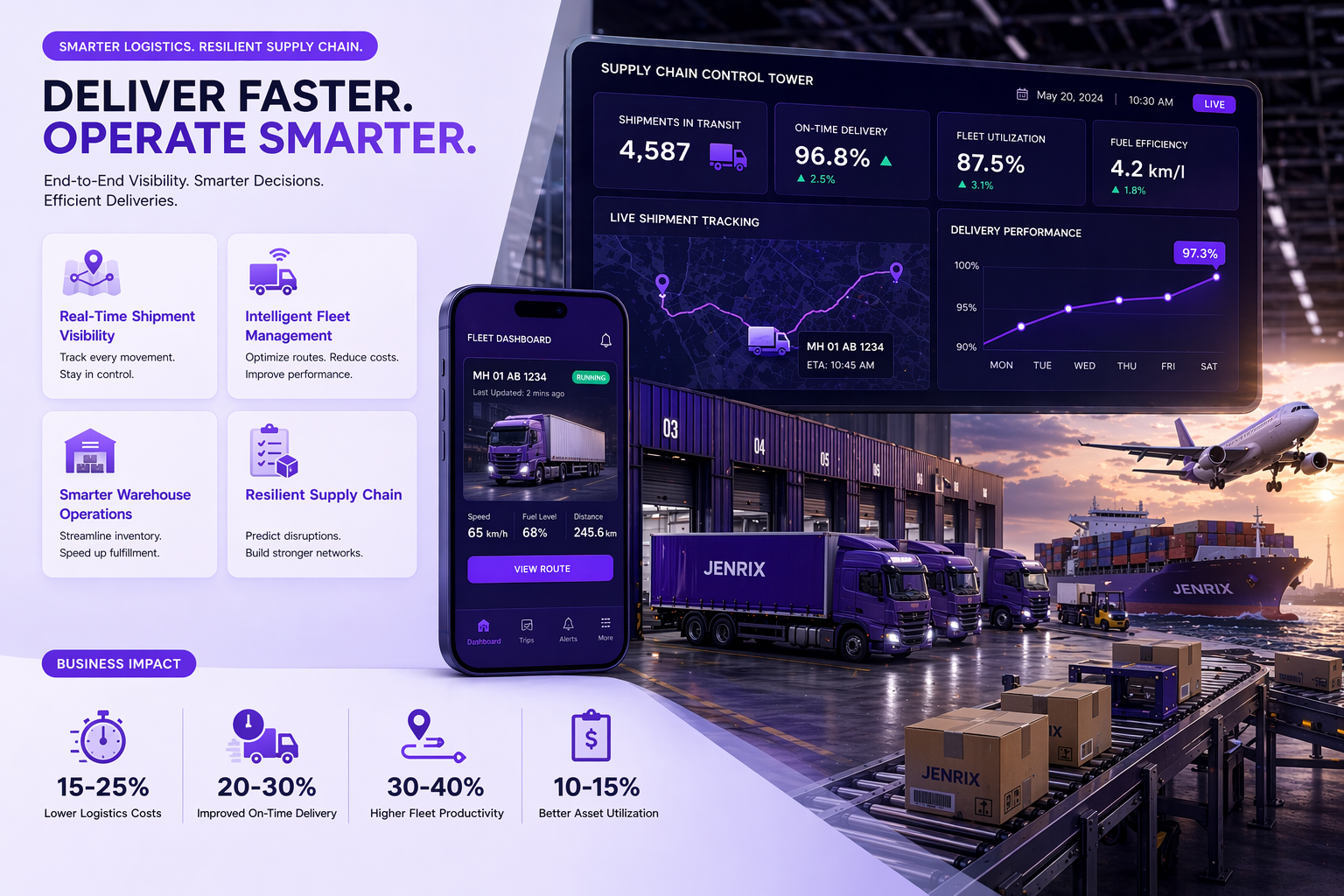
LOGISTICS OPERATIONS FLOW
Every operational movement should follow a visible and controlled path.
The exact stages vary by business, but responsibility, movement status, exceptions and closure should remain visible throughout.
01
Request
Order, pickup, transfer or movement need enters the system.
02
Assign
The correct team, vehicle, route or operating owner is selected.
03
Dispatch
The work is released into an active movement stage.
04
Move
Status progresses through the defined operational stages.
05
Resolve
Delays, blockers, failed attempts and exceptions are handled visibly.
06
Close
Completion, confirmation and operational history become available for reporting.
WHERE THIS CAN APPLY
Logistics technology for movement-heavy and coordination-heavy businesses.
Transport & Fleet Operations
Manage requests, assignment, dispatch, status movement, delays and operational dashboards.
Distribution & Delivery Networks
Coordinate movement requests, fulfilment stages, exceptions, communication and management visibility.
Warehouse Coordination
Structure inward, outward, transfer, approval and task workflows around warehouse operations.
Supply Chain Operations
Connect internal requests, partner movement, approvals, stage visibility and exception handling.
Multi-Location Operations
Give local teams clear responsibility while management sees consolidated operational movement.
Operations Leadership
Track pending movement, delays, ageing, exceptions, workload and operational bottlenecks.
LOGISTICS & SUPPLY CHAIN FAQ
Questions before building a logistics operations system.
Can Jenrix replace spreadsheet-based dispatch tracking? +
Yes. Requests, assignment, dispatch, stage movement, exceptions and closure status can be managed through one structured workflow system.
Can delay alerts and escalations be automated? +
Yes. Delays, failed attempts, pending approvals and overdue actions can trigger alerts, reminders and escalation workflows.
Can the system work across multiple branches or hubs? +
Yes. Workflow logic can be structured by location, hub, territory, team, partner or operational unit while providing consolidated management visibility.
Can dashboards show delayed and pending movements? +
Yes. Dashboards can show open requests, movement stages, ageing, delays, exceptions, pending approvals and workload.
RELATED JENRIX LOGISTICS ENGINEERING
BUILD THE MOVEMENT PROCESS INTO THE SYSTEM
Logistics teams should spend less time chasing status and more time resolving movement.
Share your dispatch process, movement workflow, exception handling or reporting problem. Jenrix can help design the operations system around how your logistics or supply chain business actually runs.